
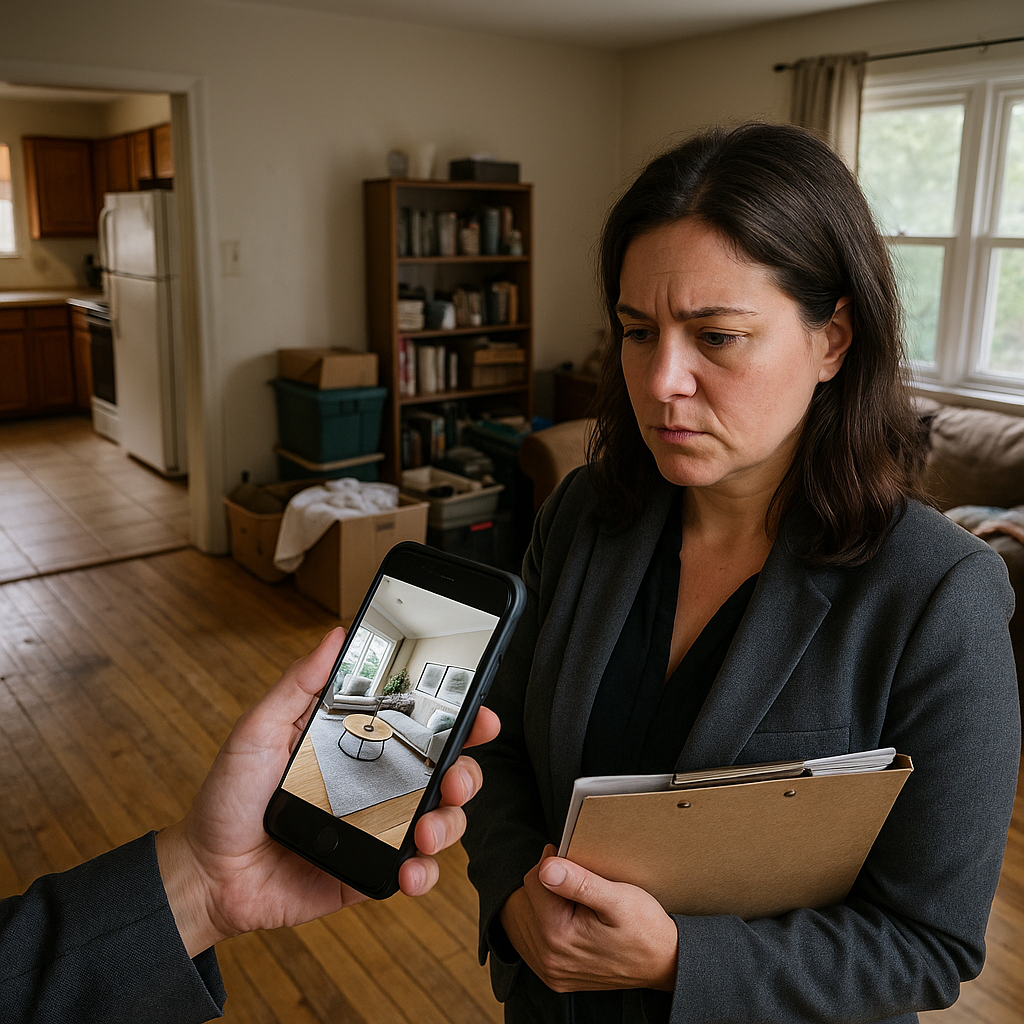
Is that home listing AI? Agents, buyers say they're being 'housefished'
In the world of real estate, homebuyers are facing a new challenge: the phenomenon known as “housefishing.” This term refers to the misleading practices associated with AI-enhanced home listings that can leave prospective buyers disappointed and frustrated.
The Rise of AI in Real Estate
With the advancement of technology, real estate agents have begun utilizing artificial intelligence (AI) to enhance property listings. AI can create stunning visuals of homes, staging them in a way that makes them appear more appealing than they may actually be. This has led to a significant shift in how homes are marketed, but it also raises ethical questions about transparency and authenticity.
Real Stories from Real Estate Agents
Realtor Sonia Rodriguez experienced a stark contrast between a home’s online listing and its real condition when she visited a condo in Annandale, Virginia. Expecting a pristine living space, she found a cluttered apartment that bore little resemblance to the bright, clean images showcased in the listing. Rodriguez remarked, “That was the first time it’s been that drastic of a difference,” highlighting the bait-and-switch nature of such listings.
Similarly, Jake Gordon, a Realtor from Long Beach, California, encountered a property with significant discrepancies between its online representation and reality. He noted, “It wasted my time, my client’s time, and it just felt like a bait and switch.” Many clients, particularly those with demanding jobs and family responsibilities, find it frustrating to invest time in viewing homes that do not match their expectations.
The Impact of AI on Home Listings
The use of AI in home staging and listing has become increasingly common, leading to a growing concern among buyers and agents alike. While AI can help visualize a home’s potential, it can also blur the lines between enhancement and deception. This has resulted in a backlash against misleading AI-enhanced listings, with many consumers voicing their frustrations on social media.
Legislation Addressing AI in Real Estate
In response to the growing concerns regarding AI-enhanced listings, California passed Assembly Bill No. 723 in January 2026. This law mandates that any digitally altered images used in real estate advertisements must include a disclosure, and if altered photos are posted online, they must be accompanied by the original unaltered images. This legislation aims to promote transparency in real estate marketing.
While some agents, like Gordon, have welcomed this law as a step towards accountability, others, like attorney and real estate broker Alan Zall, caution that enforcement may be challenging. Zall stated, “It’s hard to legislate it because the question is, was the intent of the person that did this to deceive, or did they really not understand the intricacies of AI because it’s relatively new?”
Ethical Considerations for Real Estate Agents
Despite the lack of legal requirements in some states, many Realtors adhere to a code of ethics that emphasizes fair representation of properties. Rodriguez estimates that 30% to 40% of the homes she tours do not match their online photos, raising questions about the integrity of the listings. However, not all agents are bound by these ethical standards, leading to a “Wild West” scenario in the real estate market.
How AI is Transforming Real Estate Practices
Melody Storey, a real estate agent in Oklahoma, has embraced AI for virtual staging, a practice she was introduced to by her son. Storey noted that the transition from traditional marketing methods to AI-enhanced listings has been significant. “I have used virtual staging in the past that was done with my photographer, but I don’t have to do that anymore — I can just tell AI what I want,” she explained.
Sub Gautam, a software developer, created an AI tool called PropertyPixel to simplify the photo-enhancing process. Gautam shared his experience of using AI to declutter his messy apartment digitally, demonstrating the ease with which AI can alter perceptions of a space without any physical changes being made.
The Future of AI in Real Estate
As AI continues to evolve, its impact on the real estate industry will likely grow. While it offers innovative solutions for staging and marketing properties, it also necessitates a careful consideration of ethical practices and transparency. The challenge for agents and buyers alike will be to navigate this new landscape while ensuring that honesty remains at the forefront of real estate transactions.
Frequently Asked Questions
“Housefishing” refers to the practice of using AI-enhanced images in real estate listings that misrepresent the actual condition of a property, leading to disappointment among prospective buyers.
California passed Assembly Bill No. 723, which requires that any digitally altered images in real estate advertisements include a disclosure and must be accompanied by the original unaltered images.
Buyers can protect themselves by conducting thorough research, asking for original images, and working with reputable agents who adhere to ethical standards in representing properties.
Note: The real estate industry is evolving with technology, and while AI can enhance listings, it is crucial for transparency and ethical practices to be maintained to protect buyers.


