
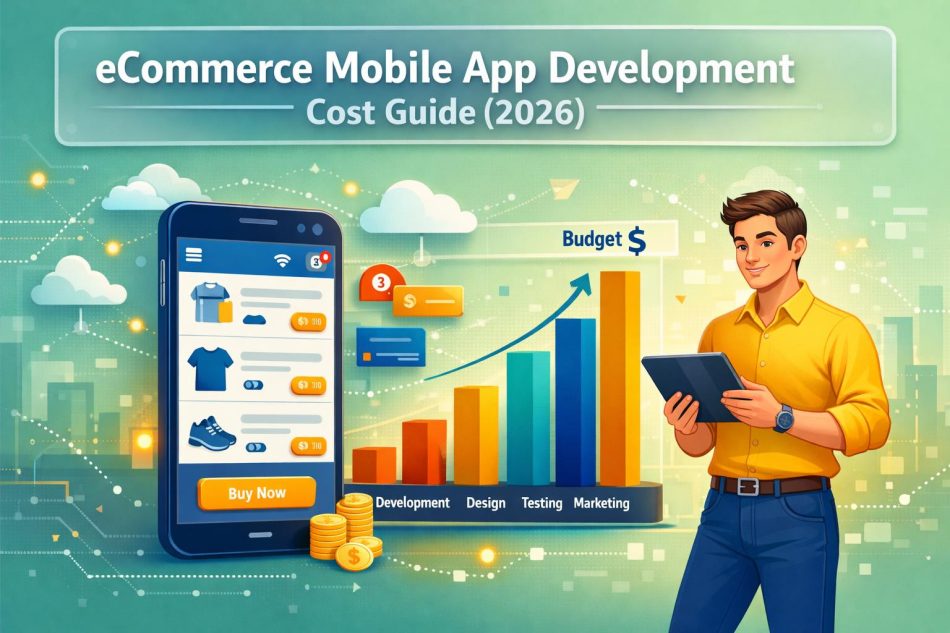
eCommerce Mobile App Development Cost Guide (2026)
Building an eCommerce store in today’s digital landscape can feel overwhelming. With the rapid evolution of technology and user expectations, many entrepreneurs find themselves asking a critical question: “How much will this actually cost?” Understanding the costs associated with eCommerce mobile app development is essential for setting realistic budgets and avoiding hidden fees.
Understanding the Cost Breakdown
For 2026, the cost of developing an eCommerce mobile app starts at around $40,000 for a basic application. Mid-range builds typically fall between $80,000 and $150,000, while large-scale enterprise solutions can exceed $300,000. These figures are not arbitrary; they reflect the increasing demand for enhanced user experiences and advanced functionalities.
Realistic Budgets for Your Store in 2026
When budgeting for a digital store, it’s crucial to have a clear understanding of your goals. Many founders mistakenly believe they need every feature from the outset, leading to frustration and financial strain. A strategic approach involves considering the following:
Minimum Viable Product (MVP) vs Full-Scale Builds
Starting with a Minimum Viable Product (MVP) allows you to focus on the core shopping loop, which includes essential features like a product list, shopping cart, and checkout. This approach enables market testing without significant financial risk. In contrast, full-scale builds incorporate additional features such as loyalty programs and advanced search filters, which can extend development timelines and increase costs.
The Hidden Reality of Maintenance Costs
It’s important to remember that costs don’t stop once your app is launched. Ongoing maintenance is necessary to keep the app functional and secure. Statistically, it’s advisable to allocate around 20% of your initial development cost annually for maintenance. For example, if your app costs $100,000 to develop, you should budget approximately $20,000 each year for updates and security patches.
Factors Driving eCommerce Mobile App Development Cost
Understanding the factors that contribute to development costs can help you make informed decisions and potentially save money. Here are the primary cost drivers:
Feature Complexity
The complexity of your feature list significantly impacts your budget. Simple integrations, such as syncing with Shopify, are relatively inexpensive, while custom solutions like inventory management systems can be costly. Assessing which features are essential versus optional can help streamline your budget.
Platform Choice: Native vs Cross-Platform
Choosing between native and cross-platform development is another critical decision. Native apps (developed separately for iOS and Android) offer superior performance but require more resources, doubling the workload. Conversely, cross-platform development allows you to write code once and deploy it across multiple platforms, potentially saving about 30% of your budget.
UI and UX Design Complexity
Design plays a crucial role in user experience. While custom designs can enhance your app’s appeal, they often come with higher costs. Utilizing standard templates can keep expenses down, but if you aim to stand out, be prepared for additional costs associated with custom screens and animations.
Backend Infrastructure and API Costs
The backend of your app is essential for data management, security, and functionality. A robust backend is necessary for handling large product catalogs and integrating with third-party services. Developers typically charge for the time required to connect these systems effectively.
Tech Stack Decisions
Your choice of tech stack can significantly affect development costs. Frameworks like Flutter and React Native are popular for startups due to their efficiency and lower costs. However, native development (using Swift for iOS and Kotlin for Android) provides the best performance but comes at a higher price.
Geographic Location and Developer Rates
The location of your development team can greatly influence costs. In North America, hourly rates can range from $150 to $250, while Eastern Europe and parts of Latin America offer skilled developers at rates between $50 and $80 per hour. Choosing the right location can help you balance quality and cost.
Future Trends Shaping 2026 App Budgets
The eCommerce landscape is evolving, and several trends are shaping the budgeting process for 2026:
Generative AI Integration Expenses
Integrating generative AI into mobile commerce is becoming a necessity rather than a luxury. Users expect smart search capabilities and responsive chatbots. While building a custom AI model may be excessive for most, utilizing APIs like OpenAI incurs additional monthly costs, along with development expenses for implementation.
AR Shopping and Spatial Computing
Augmented Reality (AR) is transforming the shopping experience, allowing customers to visualize products in their environment. However, creating high-quality 3D models is costly, with expenses ranging from $500 to $2,000 per product. For businesses with extensive catalogs, these costs can add up quickly but can lead to higher conversion rates.
Frequently Asked Questions
The average cost for developing an eCommerce mobile app in 2026 starts at around $40,000 for basic applications, with mid-range builds costing between $80,000 and $150,000, and enterprise solutions exceeding $300,000.
It is recommended to allocate approximately 20% of your initial development cost annually for maintenance. For example, if your app costs $100,000 to develop, budget around $20,000 each year for updates and security patches.