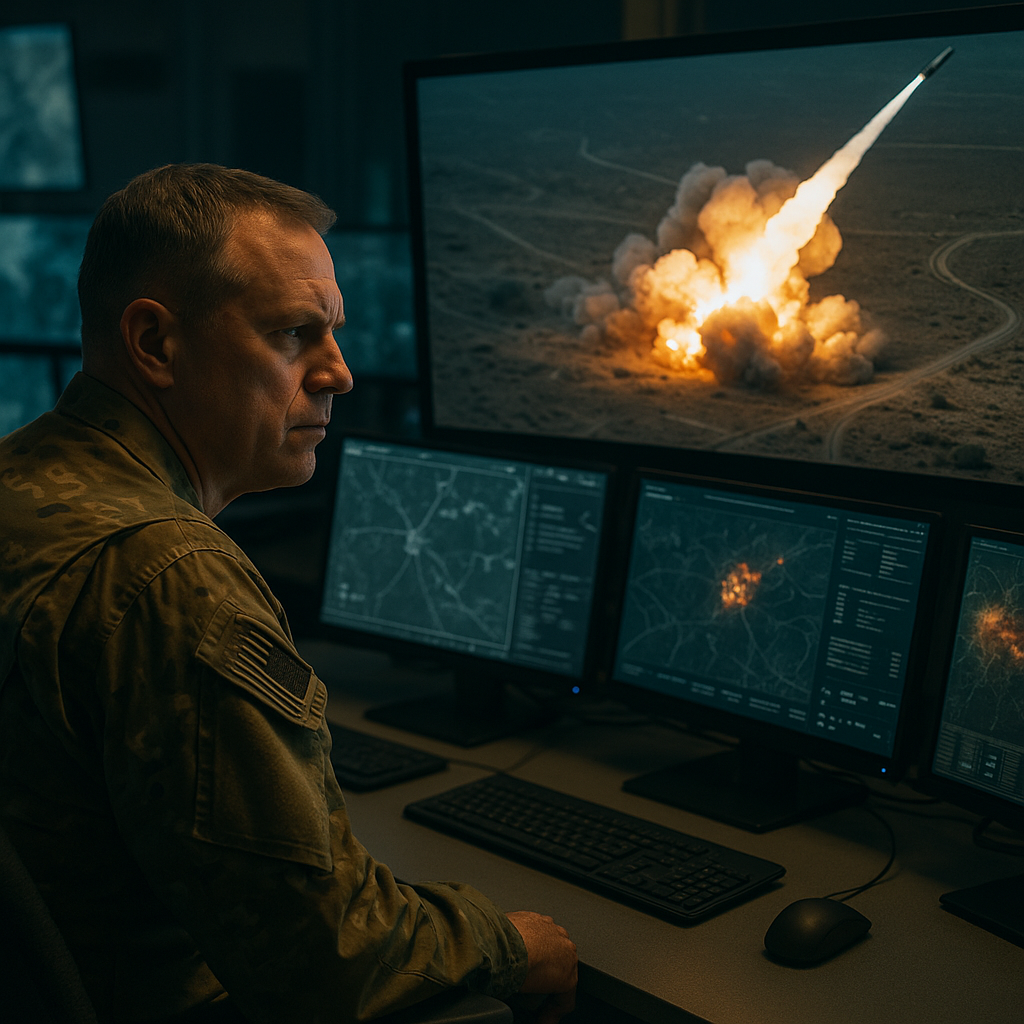
'Let AI Do It': How Claude-Backed Maven Fired 900 US Strikes On Iran In 12 Hours
In a groundbreaking application of artificial intelligence in military operations, the United States has successfully executed a series of 900 strikes on Iranian targets within a mere 12-hour timeframe. This unprecedented event was facilitated by Maven, an AI project backed by Claude, which has redefined the landscape of modern warfare.
The Role of Artificial Intelligence in Military Strategy
Artificial intelligence has increasingly become a pivotal component in military strategy, offering capabilities that enhance decision-making, speed up data analysis, and improve targeting accuracy. The integration of AI systems like Maven allows military forces to process vast amounts of information rapidly, enabling them to respond to threats with unprecedented efficiency.
Understanding Maven and Its Capabilities
Maven is a project initiated by the U.S. Department of Defense aimed at harnessing AI technologies for various defense applications. The system is designed to analyze aerial imagery and other data sources to identify potential targets and assess threats. With the backing of Claude, an advanced AI model, Maven has demonstrated its ability to operate autonomously in high-stakes environments.
Key Features of Maven
- Real-Time Data Processing: Maven can analyze incoming data streams in real-time, allowing for immediate decision-making.
- Target Identification: The AI system is capable of identifying and classifying targets with a high degree of accuracy.
- Autonomous Operation: Maven can execute missions with minimal human intervention, significantly reducing response times.
The 900 Strikes: A Case Study
The recent military operation against Iranian targets serves as a case study in the effectiveness of AI-driven warfare. Within 12 hours, Maven orchestrated 900 strikes, showcasing its ability to coordinate complex operations seamlessly.
Planning and Execution
The planning phase involved extensive data collection and analysis, where Maven utilized satellite imagery and intelligence reports to identify key targets. Once the targets were established, the AI system coordinated the strikes, ensuring that they were executed with precision and minimal collateral damage.
Outcomes and Implications
The successful execution of these strikes has significant implications for future military operations. The ability to conduct such a large-scale operation in a short period highlights the potential of AI to transform military strategies. It also raises important questions about the ethical implications of autonomous warfare and the role of human oversight in such operations.
Ethical Considerations
As the use of AI in military applications becomes more prevalent, ethical considerations must be addressed. The deployment of autonomous systems in warfare poses risks, including the potential for unintended consequences and the challenge of accountability.
Key Ethical Questions
- Accountability: Who is responsible for the actions of an AI system in combat?
- Human Oversight: How much human oversight is necessary to ensure ethical decision-making?
- Collateral Damage: What measures are in place to minimize civilian casualties?
Future of AI in Military Operations
The success of Maven in executing rapid strikes against Iranian targets marks a significant milestone in the integration of AI into military operations. As technology continues to evolve, the potential applications for AI in defense are vast, ranging from logistics and supply chain management to battlefield intelligence and reconnaissance.
Potential Developments
- Enhanced Decision-Making: Future AI systems may provide even more sophisticated decision-making capabilities, incorporating predictive analytics and machine learning.
- Integration with Other Technologies: The combination of AI with other emerging technologies, such as drones and robotics, could further enhance operational effectiveness.
- International Regulations: As AI becomes more prevalent in warfare, international regulations may evolve to govern its use and ensure compliance with humanitarian laws.
Conclusion
The operation that saw 900 strikes against Iranian targets within 12 hours is a testament to the capabilities of AI in modern warfare. As systems like Maven continue to evolve, they will undoubtedly reshape military strategies and raise critical ethical questions that must be addressed. The future of warfare is here, and it is powered by artificial intelligence.
Frequently Asked Questions
Maven is an artificial intelligence project initiated by the U.S. Department of Defense, designed to analyze data for military applications, including target identification and threat assessment.
AI improves military operations by enabling real-time data processing, enhancing target identification accuracy, and allowing for autonomous execution of missions, which reduces response times significantly.
Ethical concerns include accountability for AI actions, the necessity of human oversight, and the potential for collateral damage, particularly civilian casualties during military operations.
Note: The information presented in this article is based on the latest developments in AI and military operations as of October 2023.