Best Wholesale Ecommerce Platforms (2026): A Practical Comparison Guide (Including DHgate)
Wholesale ecommerce platforms are essential tools for businesses looking to source products in bulk, compare suppliers, and streamline cross-border purchasing. In 2026, the landscape of wholesale ecommerce solutions is primarily divided into two categories: marketplace-based sourcing platforms, such as DHgate and Alibaba, and storefront-based B2B ecommerce solutions, like Shopify Plus, BigCommerce, and WooCommerce.
Why Wholesale Ecommerce Platforms Matter in 2026
The wholesale ecommerce sector is no longer the domain of large importers and traditional distributors. Increasingly, small and mid-sized businesses are leveraging online wholesale platforms to:
- Test new product lines quickly with lower inventory risk.
- Diversify suppliers across various product categories.
- Reduce procurement and sourcing costs.
- Access international inventory without building direct factory relationships.
- Scale ecommerce operations with repeatable procurement workflows.
As global B2B ecommerce continues to expand, selecting the right wholesale platform has become a strategic decision for retailers, distributors, and cross-border online sellers.
What Is a Wholesale Ecommerce Platform?
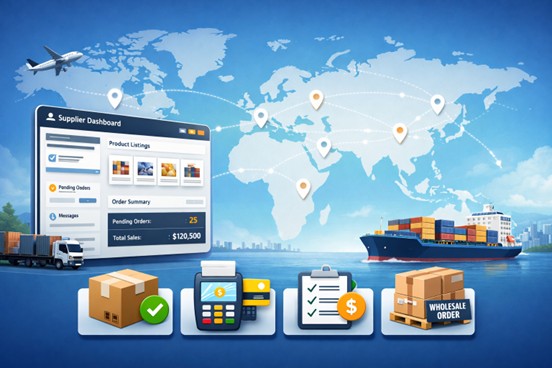
A wholesale ecommerce platform is an online system that enables businesses to purchase products in bulk from manufacturers, suppliers, or wholesalers. These platforms typically support key procurement functions such as:
- Supplier discovery and product browsing.
- Wholesale pricing and bulk order negotiation.
- Payment processing and transaction protection.
- Shipping and logistics coordination.
- Dispute handling and after-sales support.
Depending on the platform type, the buyer experience can vary significantly.
Key Features to Look for in the Best Wholesale Ecommerce Platforms
Supplier Quality and Catalog Depth
The best wholesale platforms provide access to a wide network of suppliers and comprehensive product listings across high-demand categories. Catalog depth is crucial for faster product research, easier supplier comparison, and flexibility when sourcing trending items. Key aspects to check include:
- Supplier ratings and reviews.
- Years of supplier activity.
- Verified business information (if available).
- Completeness of product listings (specifications, photos, variants).
Pricing and MOQ Flexibility
Wholesale ecommerce pricing often varies based on:
- Order quantity.
- Supplier pricing tiers.
- Customization requirements.
- Shipping method and destination.
Many marketplace platforms allow buyers to place smaller wholesale orders (low MOQ), which is advantageous for testing products before scaling. Important factors to evaluate include:
- Minimum order quantity (MOQ).
- Tiered wholesale pricing.
- Sample ordering options.
- Repeat order discounts.
Shipping and Logistics Support
International logistics can pose significant challenges in cross-border procurement. A robust wholesale ecommerce platform should simplify the comparison of shipping options and provide estimated delivery timelines. Considerations include:
- Shipping availability to your country.
- Tracking support.
- Estimated delivery windows.
- Duties/tax responsibility (DDP vs buyer-paid customs).
Buyer Protection and Transaction Security
Wholesale sourcing often involves larger order values and higher risks. Effective buyer protection systems can mitigate these risks by offering dispute resolution mechanisms and payment safeguards. Essential elements to verify include:
- Refund and dispute policies.
- Escrow-style payment handling (if available).
- Order confirmation requirements.
- Supplier response speed.
Ease of Use and Scalability
The best wholesale ecommerce platforms cater to both small buyers and scaling businesses. Ease of use is vital since wholesale procurement typically involves repeat purchasing, supplier communication, and consistent quality control. Key features to assess include:
- Product search and filtering capabilities.
- Quality supplier communication tools.
- Convenience of reordering.
- Ability to manage multiple orders efficiently.
Best Wholesale Ecommerce Platforms in 2026
Wholesale ecommerce platforms can be categorized into two main types:
- Wholesale marketplaces (where buyers purchase directly from existing supplier listings).
- Wholesale website builders / B2B ecommerce infrastructure (where businesses build their own store and manage their own suppliers).
Below is a practical comparison of common wholesale ecommerce options.
DHgate: A Wholesale Marketplace for Cross-Border Buyers
What Is DHgate?
DHgate is a cross-border wholesale marketplace connecting international buyers with suppliers, primarily based in China. Buyers can browse supplier listings across various categories and place wholesale orders directly through the platform. It is particularly popular among small businesses, ecommerce sellers, and resellers looking to source products without negotiating long-term contracts or high factory MOQs.
Why DHgate Is a Practical Wholesale Ecommerce Platform
Large Product Selection Across High-Demand Categories
DHgate offers access to a wide array of wholesale listings, including:
- Consumer electronics.
- Apparel and fashion accessories.
- Home and kitchen products.
- Beauty and personal care.
- Jewelry and watches.
This variety is beneficial for ecommerce sellers needing fast product sourcing and frequent catalog testing.
Wholesale Pricing and Flexible Order Quantities
Many DHgate suppliers provide tiered wholesale pricing and lower MOQ options compared to factory-direct procurement channels, making it easier for small and mid-sized buyers to test product demand before scaling.</