A 1-Second Delay Cuts Conversions by 20%, Experts Explain How to Fix It
As even a one-second delay erodes conversions, Bighorn Web Solutions urges brands to fix performance at the architectural level. Mobile optimization for eCommerce is becoming increasingly critical as mobile devices account for a significant portion of online sales.
Mobile Optimization for eCommerce: Key Findings
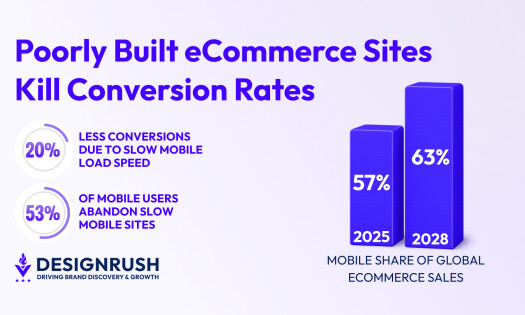
According to recent studies, 53% of mobile users abandon sites that take longer than three seconds to load. This statistic underscores the importance of performance as a primary acquisition and retention issue for eCommerce brands. By 2028, mobile is projected to account for 63% of all eCommerce sales, making mobile speed a core growth lever for businesses.
The Impact of Delays on Revenue
New performance data from Elementor indicates that even a one-second delay in mobile page load time can reduce conversion rates by up to 20%. More than half of mobile users abandon sites that take longer than three seconds to load. These figures highlight that speed is not merely a design preference or an SEO metric; it directly impacts conversion rates, paid ad efficiency, organic visibility, and acquisition costs.
Common Misconceptions about Site Speed
Despite the critical nature of speed, some eCommerce brands treat it as an afterthought. They often resort to superficial fixes such as image compression or swapping out plugins. Caleb Bradley, CEO of Bighorn Web Solutions, notes that while these surface fixes can improve speed scores, they rarely address the root cause of performance issues, which are often architectural in nature.
Where eCommerce Performance Breaks Down
In most cases, slow performance is not due to a single point of failure but rather a series of backend decisions that create bottlenecks across the entire eCommerce site. Here are some common issues that lead to performance degradation:
- Overloaded themes and third-party scripts: Frontend templates often carry logic that should run server-side. Each additional script introduces execution time and dependency chains that delay rendering.
- Weak or missing caching: Without proper server and application-level caching, the system rebuilds content repeatedly instead of serving optimized versions.
- Inefficient database queries and excessive API calls: Every product view can trigger pricing rules, inventory checks, personalization engines, and recommendation queries. Multiply that by thousands of sessions, and the delay compounds.
- ERP and middleware bottlenecks: Legacy integrations can slow dynamic requests, particularly when systems were not designed for real-time eCommerce traffic.
- Hosting misalignment: Environments optimized for static sites struggle under dynamic commerce workloads, especially during traffic surges.
Audit Where Revenue Is Actually Lost
When brands suspect that site performance is slowing down, they typically conduct audits to identify issues. While audits are essential, the pages that undergo scrutiny are critical for uncovering the problem. Caleb Bradley explains, “Synthetic tests tell part of the story, but real user performance data reveals where actual friction occurs.”
The goal is to isolate what is slowing down revenue-generating pages, specifically on Product Detail Pages (PDPs), the shopping cart, and checkout processes.
Strategies to Improve Site Performance
To address the performance issues that lead to revenue loss, eCommerce brands can implement several strategies:
- Optimize Backend Infrastructure: Ensure that the backend architecture is designed to handle dynamic requests efficiently. This includes choosing the right hosting provider and optimizing server configurations.
- Implement Effective Caching: Use both server-side and application-level caching to serve optimized versions of content quickly, reducing load times significantly.
- Minimize Third-Party Scripts: Limit the number of third-party scripts and ensure that the necessary ones are optimized for performance.
- Streamline Database Queries: Optimize database queries to reduce the load time for pages, especially those that are frequently accessed.
- Regular Performance Audits: Conduct regular audits of the site to identify and rectify performance bottlenecks before they affect user experience.
Conclusion
In conclusion, the impact of a one-second delay on conversion rates is significant. As mobile commerce continues to grow, brands must prioritize site speed and performance to ensure they do not lose potential revenue. By addressing backend issues and implementing effective strategies, eCommerce businesses can enhance user experience, boost conversions, and ultimately drive sales.
Frequently Asked Questions
A one-second delay in page load time can reduce conversion rates by up to 20%, significantly affecting potential revenue.
Improving eCommerce site performance can be achieved by optimizing backend infrastructure, implementing effective caching, minimizing third-party scripts, streamlining database queries, and conducting regular performance audits.
Mobile speed is crucial for eCommerce because 53% of mobile users abandon sites that take longer than three seconds to load, and mobile is projected to account for 63% of all eCommerce sales by 2028.
Note: Speed optimization is not just a technical requirement; it is essential for maintaining competitive advantage in the rapidly evolving eCommerce landscape.