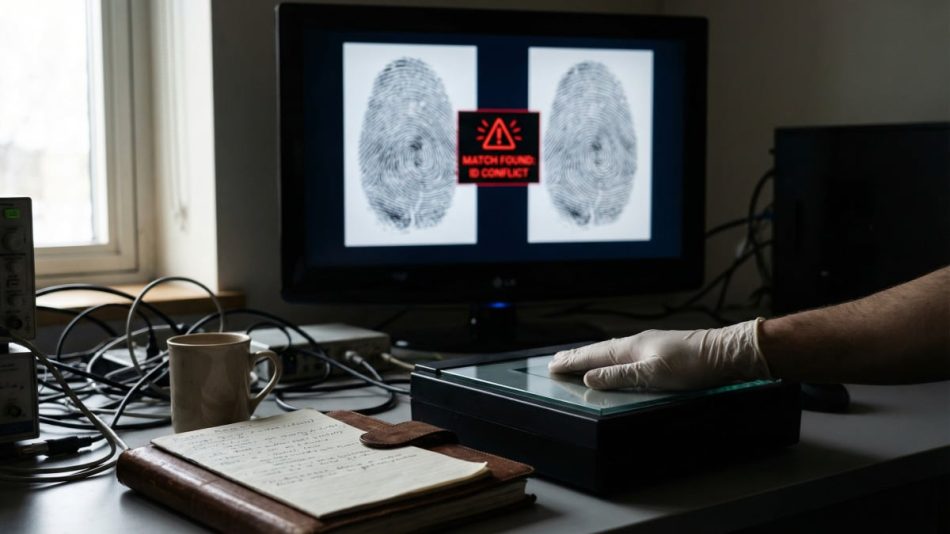
AI has just discovered something about our fingerprints that could overturn the justice system and our security
In a remarkable development, artificial intelligence (AI) has unveiled findings that could fundamentally alter our understanding of fingerprint uniqueness, with far-reaching implications for the justice system and personal security. For over a century, the belief that no two individuals possess identical fingerprints has been a cornerstone of forensic science. However, recent AI research suggests that this assumption may not be as infallible as previously thought.
The Certainty Called into Question
The uniqueness of fingerprints has long been a foundational pillar of criminal identification, relied upon by law enforcement agencies worldwide. This assumption has led to numerous convictions based on fingerprint evidence, often regarded as nearly foolproof. Yet, a team of researchers employing advanced AI analysis has made a startling discovery: fingerprints from different fingers of the same individual can exhibit common patterns that human experts have historically overlooked.
Moreover, the AI analysis revealed that fingerprints from different individuals can share striking similarities when examined at specific scales. Trained on millions of fingerprint images, the AI identified correlations and patterns that human examiners had never noticed before. While this does not entirely negate the uniqueness of fingerprints, it raises questions about the extent of their distinctiveness, suggesting that the degree of uniqueness may have been significantly overstated.
Implications for the Justice System
The implications of this discovery are profound and multifaceted. If fingerprint evidence is not as reliable as once believed, it prompts a critical examination of how many wrongful convictions may have occurred due to flawed identifications. The legal system’s reliance on fingerprint matches as near-certain evidence is now under scrutiny.
Forensic science experts are divided on the ramifications of these findings. Some welcome the AI analysis as a necessary correction to an overconfident system that has relied heavily on fingerprint identification for decades. They argue that this newfound understanding could lead to more accurate forensic practices and a reevaluation of how fingerprint evidence is interpreted in court.
On the other hand, some experts contend that while the AI’s findings are intriguing, they do not invalidate the decades of practical experience accumulated in the field of fingerprint identification. They emphasize that fingerprint analysis has been a reliable tool for law enforcement, and that the AI’s conclusions should be approached with caution.
A New Chapter in Forensic Science
This groundbreaking discovery opens a new chapter in the ongoing debate about the reliability of forensic evidence. As AI technology continues to advance, it is likely to uncover other long-held assumptions that warrant reevaluation. The potential for AI to challenge established norms in forensic science could lead to significant changes in how evidence is gathered, analyzed, and presented in court.
Future Considerations
As the legal system grapples with these revelations, several key considerations emerge:
- Reevaluation of Evidence: Courts may need to reconsider the weight given to fingerprint evidence in criminal cases, especially in light of the new findings.
- Training for Law Enforcement: Law enforcement agencies may require updated training to incorporate the latest AI findings into their fingerprint analysis protocols.
- Public Awareness: It is essential to inform the public about these developments to foster a better understanding of forensic science and its limitations.
Conclusion
The recent AI discovery regarding fingerprints challenges long-held beliefs and underscores the need for ongoing scrutiny of forensic evidence. As we move forward, it is crucial to balance the advancements in technology with the principles of justice and accuracy in the legal system.
Frequently Asked Questions
The AI discovery revealed that fingerprints from different fingers of the same person can share common patterns, and fingerprints from different individuals can show significant similarities when analyzed at certain scales.
This discovery could lead to a reevaluation of the reliability of fingerprint evidence in court, potentially resulting in the overturning of wrongful convictions and changes in how fingerprint evidence is treated in legal proceedings.
The implications include a need for updated training for law enforcement, a reevaluation of evidence standards, and increased public awareness about the limitations of forensic science.
Note: The findings from AI research highlight the importance of continuous evaluation and adaptation in forensic science to ensure justice and accuracy in legal proceedings.