Ecommerce Vs Physical Stores In The US: How Much Of Retail Is Online in 2026? – Freedom For All Americans
As we delve into the evolving landscape of retail in the United States, a pivotal question arises: How much of retail actually occurs online today? The digital age has transformed daily life, with smartphones facilitating banking, communication, entertainment, and increasingly, product discovery. However, the reality of online shopping is more nuanced than many assume.
Key Points
- Online retail constitutes approximately 16% to 17% of total U.S. retail sales in early 2026, according to U.S. Census data.
- Physical stores still dominate the majority of spending, particularly for urgent purchases and products that benefit from in-person experience.
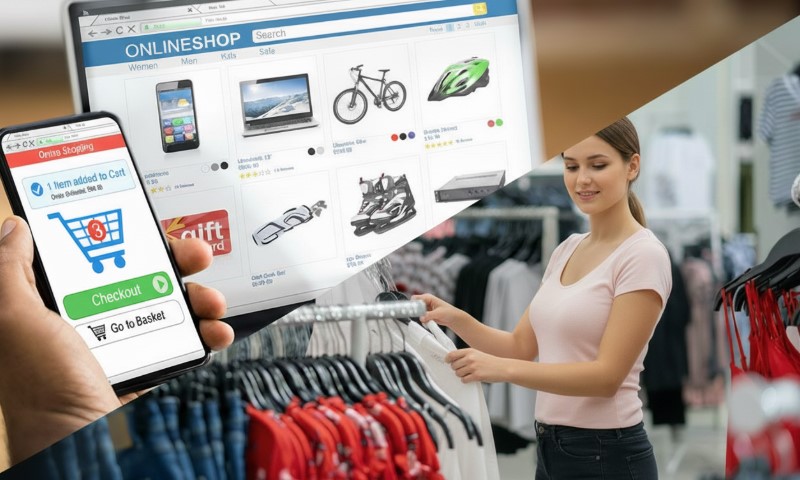
- Modern retail operates as a blended system, with shoppers seamlessly transitioning between online research and in-store purchases.
- E-commerce continues to grow steadily, bolstered by mobile shopping, improvements in logistics, and enhanced digital product discovery.
The Most Reliable Number for 2026
To understand the online retail landscape, analysts often rely on various datasets. The most credible benchmark comes from the U.S. Census Quarterly Retail E-Commerce Report, which tracks e-commerce as a share of total retail sales. The latest figures available at the start of 2026, derived from Q3 2025, are as follows:
- Adjusted U.S. retail e-commerce sales: $310.3 billion
- Adjusted total retail sales: $1,893.6 billion
- E-commerce share (seasonally adjusted): 16.4%
- E-commerce share (not adjusted): 15.8%
The Federal Reserve Economic Data (FRED) indicates a gradual rise in the e-commerce share throughout 2025, with the following quarterly trends:
- Q4 2024: 16.2%
- Q1 2025: 16.1%
- Q2 2025: 16.3%
- Q3 2025: 16.4%
This data illustrates that online retail is steadily growing, albeit gradually rather than through dramatic leaps.
Why The “Online Share” Question Causes Confusion
Many articles cite a single percentage regarding online retail without providing context, leading to misconceptions and unrealistic expectations. Retail measurement in the United States employs various frameworks, each answering different questions. Major sources include:
- U.S. Census Quarterly Retail E-Commerce Report: Tracks e-commerce sales as a share of total retail.
- Monthly Retail Sales Report: Covers retail and food services combined, often misinterpreted as identical to the e-commerce report.
- Private Analytics Firms: Companies like Adobe Analytics and Mastercard SpendingPulse analyze digital trends and shopping behavior.
A responsible approach to understanding online retail must incorporate the official Census baseline, contextual information, and supporting insights from credible private datasets.
Why Physical Stores Still Dominate U.S. Retail
Despite the rapid growth of e-commerce, physical stores continue to account for the majority of retail spending. Several factors contribute to this trend:
- Immediate Access: Certain purchases require instant availability, such as cold medicine, batteries, and household supplies. Physical stores provide immediate access that online shopping cannot match.
- Product Experience: Many products benefit from physical interaction, including clothing, furniture, and electronics. Shoppers often research online before visiting stores to make final decisions.
- Support for E-Commerce Logistics: Retail stores increasingly function as infrastructure for digital commerce, serving as local fulfillment hubs, pickup points, and return centers.
Consumer Shopping Behavior Changed During 2025
In 2025, consumer shopping patterns demonstrated a clear trend of blending online and in-store activities. Holiday shopping provided a vivid snapshot of this behavior:
- Adobe Analytics reported $257.8 billion in U.S. online holiday spending, marking an 8% year-over-year growth.
- During Cyber Week, $44.2 billion was spent, with $14.25 billion on Cyber Monday.
- Mobile shopping gained significant traction during the holiday season, driven by promotions and AI-assisted product discovery.
Mastercard SpendingPulse also noted that e-commerce grew faster than in-store sales during the holiday period, although physical retail still recorded positive growth. Shoppers increasingly moved between channels throughout the purchase process, leading retail professionals to describe the shopping experience as fluid rather than strictly channel-specific.
The Census Data Includes Important Methodology Details
Interpreting e-commerce share accurately requires attention to methodology details. The U.S. Census data provides a comprehensive view of retail sales, but understanding the nuances is crucial for making informed decisions.
Frequently Asked Questions
As of early 2026, online retail accounts for approximately 16% to 17% of total U.S. retail sales, according to U.S. Census data.
Physical stores dominate retail spending due to factors like immediate access to products, the need for product experience, and their role in supporting e-commerce logistics.
Consumer shopping behavior