
How a Nebraska nonprofit is making change with e-commerce
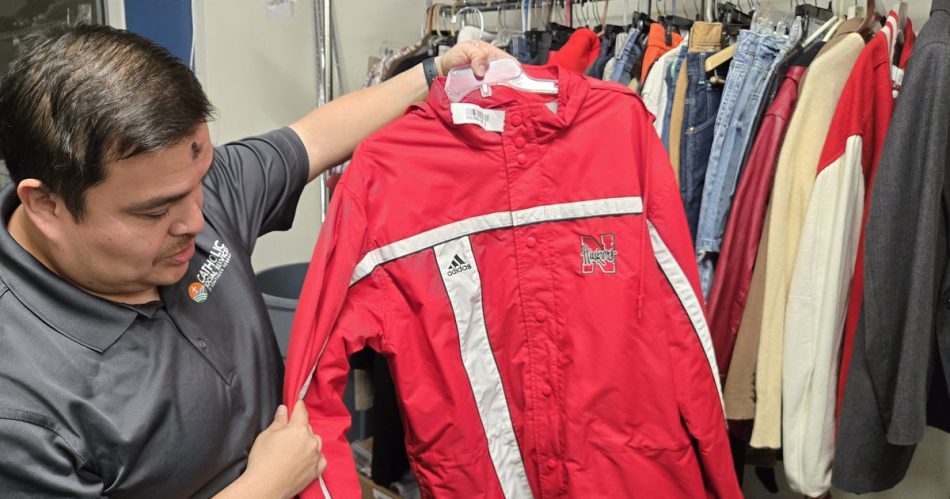
In a small warehouse building on Lincoln’s O Street, a unique initiative is taking place. Donated items such as toy collectibles, books, sports memorabilia, and vintage Husker gear are neatly organized and listed for sale online. This is not a small business or a savvy collector; it is the Catholic Social Services of Southern Nebraska (CSS), a nonprofit organization that has embraced e-commerce to enhance its mission.
The Shift to E-Commerce
CSS has been operating thrift stores to sell donated goods at affordable prices since the early 2000s. However, in 2023, the organization made a strategic decision to enter the online resale space. According to Mario Racicot, the director of e-commerce at CSS, the organization aimed to be better stewards of the generous donations it receives from the community.
“Our community is extremely generous to us with the donations that they give us,” Racicot stated. “So, we thought, if a donor is giving us their generous donation, how can we better utilize that donation?”
Maximizing Donations
Donors trust CSS to make the most of their contributions. Sometimes, an item might be sold in a thrift store, but other times, listing it online can significantly increase its value. Racicot explained, “If we can leverage that item and now get 80 bucks for that item instead of selling it for five or ten dollars, we could then use the opportunity to help our clients at a greater multitude.”
Many donations received by CSS are in excellent condition and ready to be resold at collector prices. For instance, Racicot mentioned that they often receive high-quality shoes, some of which are brand new, and have sold shoes for upwards of $200. One of the standout sales involved a sterling silver pitcher donated by a woman clearing out her basement, which sold for close to $600.
Revenue Generation for Services
The e-commerce initiative has created a new revenue stream that supports CSS’s various services. Racicot highlighted the importance of these funds: “We have a lot of legal immigration law clients that come to us and they need help with their documentation. We have a domestic violence survivor shelter unit here in Lincoln that provides support for mothers, women, and their families. We have the food market that allows clients to come in and get food.”
These services are in high demand across southern Nebraska, and the e-commerce operation allows CSS to help more clients. Racicot emphasized, “We’re trying to help as many clients as we can. This just provides us an opportunity to help at a larger capacity.”
Operational Efficiency and Sustainability
CSS operates thrift stores in Lincoln, Auburn, Hastings, and Imperial, with donations from these locations also contributing to online sales. If an item doesn’t sell online, it is then put up for sale in a thrift store. The e-commerce operation generates over $100,000 annually, enough to support approximately six women through the CSS St. Gianna’s domestic violence survivor program.
Development Director John Soukup noted that e-commerce not only aids in financial sustainability but also promotes environmental sustainability. “It’s a way to reuse things, regift things, and recycle things that’s really a part of God’s plan for keeping this earth clean,” he said.
Since 2020, CSS has implemented a process for sorting stained, ripped, or otherwise unwearable clothing for baling and recycling, earning recognition with a Keep Nebraska Beautiful Sustainability Award in 2023. Racicot shared that they continuously seek ways to operate leaner, stating, “I haven’t bought shipping boxes since last summer, saving thousands of dollars.” Instead, they utilize boxes from local bookstores and free boxes provided by USPS.
Leveraging Technology
Technology plays a crucial role in the efficiency of CSS’s e-commerce operations. Racicot can quickly assess the value of items by taking a photo and checking eBay for past sales. The organization has also brought in a contractor to help scale operations, ensuring that every item is barcoded and sorted. CSS utilizes platforms like eBay, Facebook Marketplace, and Poshmark to reach a broader audience.
“There was a lot of strategy behind it, so I needed some assistance,” Racicot explained. “Then once they left, I just hit the ground running and have created a great team that is excited and passionate about seeing what something is actually worth and getting it into the right hands.”
The Broader Impact of E-Commerce
CSS is not the only nonprofit leveraging the growing secondhand market in the U.S. Organizations like Goodwill and the Salvation Army also operate online resale stores. Additionally, eBay offers Charity Seller account benefits to nonprofit organizations, making it easier for them to participate in the online market.
According to CapitalOne Shopping Research, Nebraska boasts the highest proportion of nonprofit thrift stores, approximately 52%. With the online secondhand market continuing to expand, more of the state’s nonprofits are likely to explore e-commerce as a means to support their missions.
Frequently Asked Questions
CSS utilizes technology to assess the value of items by taking photos and checking past sales on platforms like eBay. This helps them maximize the potential revenue from donations.
CSS sells a variety of items online, including toy collectibles, books, sports memorabilia, vintage clothing, electronics, and household goods.
The revenue generated from e-commerce helps fund various services provided by CSS, including legal assistance for immigration, support for domestic violence survivors, and food distribution programs.