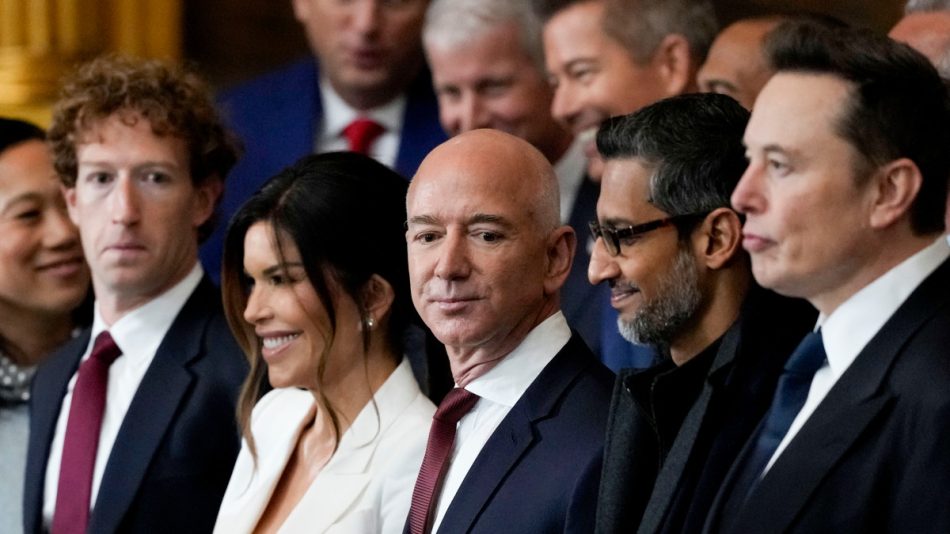
Nobel laureate Joe Stiglitz says not only can AI take your job, it’ll make the ‘tech bro’ class richer while doing it
Joseph Stiglitz, a Nobel Prize-winning economist, has raised significant concerns regarding the impact of artificial intelligence (AI) on economic and political inequality. In his view, AI is not merely a technological advancement but a catalyst that could exacerbate existing disparities unless proactive measures are taken by governments and institutions.
The Economic Threat of AI
In a recent interview with Fortune, Stiglitz emphasized that AI has the potential to strip jobs from the workforce while simultaneously concentrating wealth among a small elite, often referred to as the “tech bros.” He warns that if left unchecked, AI could lead to a new era of inequality, similar to the patterns observed during the Industrial Revolution.
Stiglitz’s insights are drawn from his extensive career studying capitalism’s failures, financial crises, and the erosion of the American middle class. He believes that the current trajectory of AI adoption could worsen economic disparities, particularly as the wealth generated by AI tends to benefit those who already possess significant resources.
The Role of Government
Stiglitz argues that the very individuals advocating for AI are also pushing for reduced government intervention, which undermines the ability of institutions to manage the transition effectively. He describes this as a self-fulfilling trap, where the tech oligarchs’ desire for smaller government hinders necessary support systems for workers displaced by AI.
He asserts that government intervention is crucial for facilitating a successful transition to an AI-driven economy. This includes providing support for workers who may find themselves out of jobs and helping them transition to new roles where they can be productive. However, the push for reduced regulation often conflicts with the needs of the workforce.
The Consequences of Inaction
The implications of inaction are stark. Stiglitz points out that the current economic landscape mirrors historical patterns where productivity gains accrue to the wealthy while workers see little benefit. Recent studies indicate that corporate profits are rising while labor income is declining as a share of GDP, highlighting a growing divide between the rich and the poor.
Stiglitz draws parallels to the Great Depression, where increased agricultural productivity led to a surplus of labor without adequate mechanisms to transition workers to new opportunities. He emphasizes that without a robust institutional framework, similar challenges could arise in the face of AI advancements.
AI as a Tool for Augmentation
Despite his concerns, Stiglitz does not view AI as an inherently negative force. He utilizes AI in his own research, describing it as a tool that augments human intelligence rather than replacing it. He refers to this concept as “Intelligence Assisting” (IA), where AI serves as a research assistant, enhancing human capabilities rather than displacing them.
Stiglitz believes that the distinction between AI as a tool and AI as a displacement engine is fundamentally political. The outcomes of AI development depend on who controls the technology and how its benefits are distributed. In a society where economic power shapes political power, he fears that the potential for equitable distribution of AI’s gains may be lost.
Conclusion
Joseph Stiglitz’s insights into the implications of AI on economic and political inequality serve as a critical reminder of the need for proactive governance in the face of technological advancement. As AI continues to evolve, it is imperative for policymakers to consider the broader societal impacts and work towards ensuring that the benefits of technology are shared equitably.
Frequently Asked Questions
Stiglitz is concerned that AI will exacerbate economic and political inequality, concentrating wealth among a small elite while displacing workers.
He believes governments should provide support for workers displaced by AI and create an institutional framework to facilitate a successful transition to an AI-driven economy.
Stiglitz distinguishes AI as a potential displacement engine and IA as a tool that augments human intelligence, enhancing capabilities rather than replacing them.
Note: The insights presented in this article reflect the views of Joseph Stiglitz and highlight the importance of addressing the societal impacts of AI.