
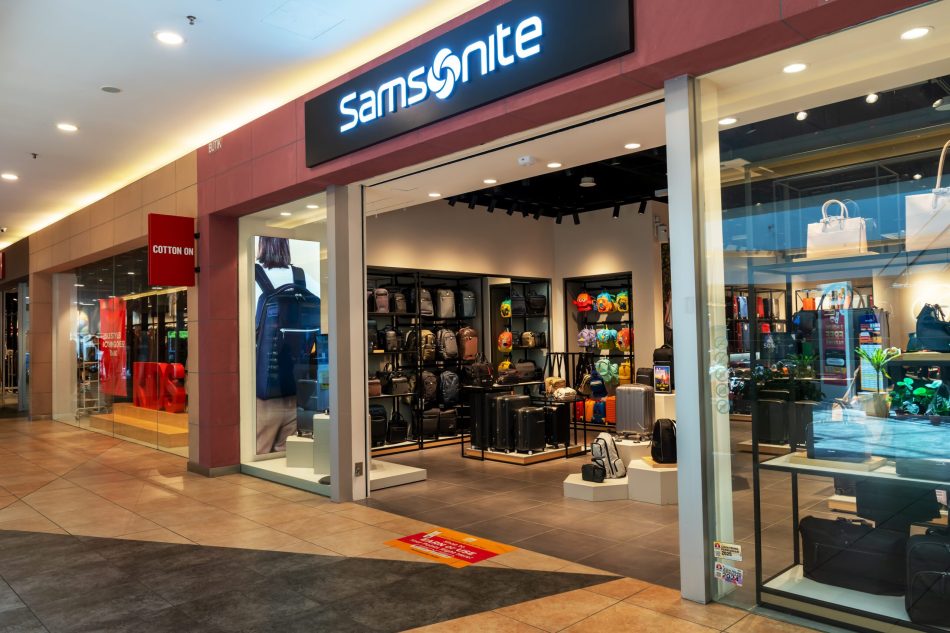
Samsonite leans on ecommerce growth as wholesale demand weakens
In a rapidly changing retail landscape, Samsonite has reported a significant shift in its sales strategy, focusing more on ecommerce and direct sales as traditional wholesale demand shows signs of weakening. The company’s recent financial results highlight the growing importance of online sales channels, which have become a cornerstone of its business model.
Financial Performance Overview
Samsonite Group’s latest earnings report revealed that the company experienced a modest recovery in sales during the fourth quarter of the fiscal year. The total sales for the fourth quarter reached $963.3 million, up 2.2% from $942.4 million in the same period the previous year. This growth marks a return to positive sales growth after experiencing declines earlier in 2025.
However, for the full year, the company reported a decline in sales, with total revenue falling 2.5% to $3.50 billion from $3.59 billion. This decrease is attributed to softer demand in key markets and reduced ordering from retail partners, reflecting broader trends in consumer behavior.
Ecommerce Growth
One of the most notable aspects of Samsonite’s financial performance is the growth in its ecommerce sector. In the fourth quarter, ecommerce revenue surged by 12.0%, reaching $145.5 million, compared to $128.0 million in the previous year. This increase allowed ecommerce to account for 15.1% of total sales in the quarter, up from 13.6% a year earlier.
For the full year, ecommerce sales rose 6.4% to $437.2 million, contributing to 12.5% of total sales, an increase from 11.4% in 2024. This upward trend indicates a significant shift in consumer purchasing habits, with more customers opting to shop online.
Direct Sales Performance
In addition to ecommerce, overall direct sales—which include both ecommerce and sales from company-owned stores—also saw positive growth. Direct sales increased by 7.0% in the fourth quarter to $434.5 million and edged up 2.1% for the year to $1.46 billion. These channels represented 45.1% of fourth-quarter sales and 41.7% of annual sales, both higher than the previous year.
Challenges in Wholesale Sales
While ecommerce and direct sales flourished, wholesale sales faced challenges. In the fourth quarter, wholesale revenue fell by 1.4% to $528.8 million, and for the full year, wholesale sales dropped 5.6% to $2.04 billion. Many retail partners, particularly in North America, reduced their orders as consumer demand softened, leading to tighter inventory levels.
Regional Performance Insights
Samsonite’s performance varied significantly by region. Europe experienced modest growth, supported by a 9.1% increase in ecommerce sales. Asia also returned to growth in the fourth quarter, while North America continued to struggle, although results showed improvement compared to earlier in the year.
Strategic Shift Towards Ecommerce
Recognizing the changing landscape, Samsonite is strategically shifting its focus towards direct channels, including ecommerce, and higher-priced brands such as Tumi. To facilitate this transition, the company has established a new global marketing and ecommerce group aimed at enhancing its digital presence and coordinating online efforts.
CEO Kyle Gendreau emphasized the importance of digital channels, stating, “We want Samsonite to be the clear winner in digital.” He highlighted the need for a comprehensive approach that encompasses direct-to-consumer ecommerce, wholesale, and e-retailers to drive overall business growth.
Investment in Future Growth
To support its ecommerce initiatives, Samsonite plans to invest approximately $135 million in 2026. This investment will focus on enhancing ecommerce platforms, customer engagement tools, and other technological advancements to improve the online shopping experience.
Profitability Concerns
Despite the positive trends in online sales, Samsonite faced profitability challenges. The company reported a decline in profits for both the fourth quarter and the full year, primarily due to lower overall sales and increased operating costs. However, there was notable growth in the non-travel product category, including backpacks and accessories, which saw an 8.2% increase in sales during the fourth quarter and a 3.5% increase for the year.
Outlook and Future Expectations
Looking ahead, Samsonite anticipates that sales in the first quarter of 2026 will be relatively flat compared to the previous year, citing disruptions related to ongoing conflicts in the Middle East. The company acknowledged the uncertainty in the market, making it challenging to provide a comprehensive outlook for the full year. Nevertheless, the emphasis on ecommerce and direct sales will remain central to its strategy as consumer preferences continue to evolve.
Frequently Asked Questions
Samsonite is shifting towards ecommerce due to changing consumer behavior, with more customers preferring to shop online. This shift has been further emphasized by declining wholesale demand and the need to adapt to the digital marketplace.
In the last fiscal year, Samsonite reported a 2.5% decline in total sales, amounting to $3.50 billion, primarily due to reduced ordering from retail partners and softer demand in key markets.
Samsonite plans to invest approximately $135 million in 2026 to enhance its ecommerce platforms, customer engagement tools, and other technologies aimed at improving the online shopping experience.
</