Coupang, South Korea’s Amazon, Is Copying Its Worst Habits
Coupang, a prominent e-commerce platform in South Korea, has recently come under scrutiny for its troubling practices that mirror some of the worst habits of global giants like Amazon. As a publicly traded company on the New York Stock Exchange (NYSE), Coupang has built its empire on a foundation that raises serious concerns regarding data security, labor practices, and corporate governance.
The Rise of Coupang
Founded in 2010 by Bom Kim, a Korean American Harvard Business School dropout, Coupang initially started as a site for trading discount coupons. Over the years, it evolved into a full-fledged e-commerce platform, boasting over one hundred fulfillment centers across South Korea. The company has capitalized on the densely populated urban areas of South Korea, offering rapid delivery services that cater to the country’s 24/7 lifestyle.
As a result, Coupang has managed to capture approximately a quarter of South Korea’s e-commerce market, making it the fifth-largest globally. However, despite its rapid growth and strong revenue figures, the company has faced significant challenges regarding profitability since it turned its first quarterly profit in 2022.
Labor Practices and Worker Safety
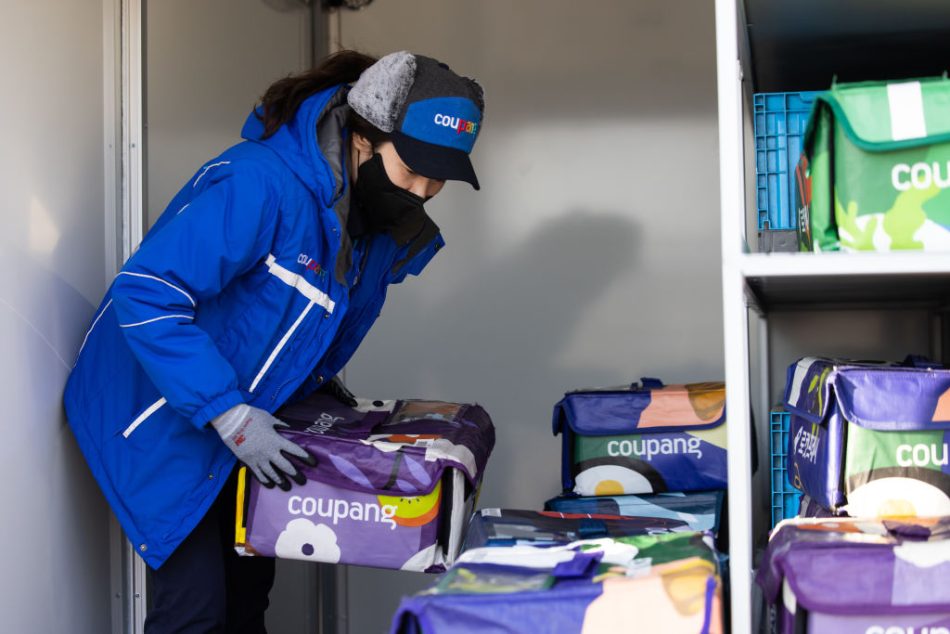
One of the most alarming aspects of Coupang’s operations is its treatment of workers. Reports indicate that the company has been linked to numerous worker deaths due to overwork-related conditions. In 2025 alone, eight workers died, with many suffering from severe health issues like cerebral hemorrhages, often after working nighttime or predawn shifts.
Coupang employs a high-pressure work environment, where workers are constantly monitored and evaluated based on performance metrics. The company has replaced the term “Units Per Hour” (UPH) with “High Performance Throughout” (HTP) to describe its demanding work quotas. However, this change has not led to a reduction in workloads, and workers continue to face intense pressure to meet unrealistic targets.
Financialization and Employment Practices
Coupang’s business model heavily relies on at-will employment, which allows the company to maintain a flexible workforce while avoiding long-term commitments to employees. This practice has significant implications for job security and worker rights. As of now, Coupang is the third-largest employer in South Korea, trailing only behind major corporations like Samsung Electronics and Hyundai Motor Group.
The company hires a substantial number of at-will employees through short-term contracts and its smartphone app, which has led to a precarious work environment. Many workers find themselves dependent on Coupang for short-term financial relief, despite the risks associated with such employment.
Data Breaches and Accountability
In December 2022, Coupang disclosed a massive data breach that exposed the personal information of nearly thirty-four million customers. This incident has raised significant concerns about the company’s data security practices and its overall accountability. The breach potentially compromised the national ID numbers and financial details of a large portion of South Korea’s population, leading to public outrage and calls for greater regulatory oversight.
Despite the severity of the situation, Coupang’s leadership has been criticized for evading accountability. CEO Bom Kim has utilized his U.S. citizenship and the company’s incorporation in the U.S. to resist inquiries from South Korean authorities, further complicating efforts to hold the company accountable for its actions.
Unionization Efforts and Labor Rights
The labor landscape at Coupang is further complicated by the company’s anti-union tactics. The National Warehouse Workers Union, which is affiliated with the Korean Confederation of Trade Unions, has engaged in numerous negotiations with Coupang management but has yet to reach a collective bargaining agreement. The company’s strategy of mixing regular and temporary workers on the same fulfillment lines has made it challenging for employees to organize and advocate for their rights.
Many young workers, while aware of the health hazards associated with their jobs, feel compelled to continue working for Coupang due to the lack of alternative employment opportunities. The normalization of precarious work has led local governments to offer generous tax incentives to the company, further entrenching its position in the market.
Conclusion
Coupang’s trajectory serves as a cautionary tale about the future of global e-commerce platforms and their treatment of workers. As the company continues to grow, it must confront the serious issues of labor rights, data security, and corporate accountability. The lessons learned from Coupang’s practices may well resonate beyond South Korea, influencing the broader landscape of the global platform economy.
Frequently Asked Questions
The main concerns include high-pressure work environments, high turnover rates, and reports of worker deaths due to overwork-related conditions. Many workers face intense scrutiny and unrealistic performance targets.
Coupang disclosed a significant data breach in December 2022, exposing the personal information of millions of customers. The company’s response has been criticized for lacking transparency and accountability.
Workers face challenges such as anti-union tactics employed by Coupang, the mixing of regular and temporary employees, and a lack of support for collective bargaining efforts, making it difficult to advocate for their rights.
Note: The information presented in this article is based on current understanding and reports available as of October 2023.