
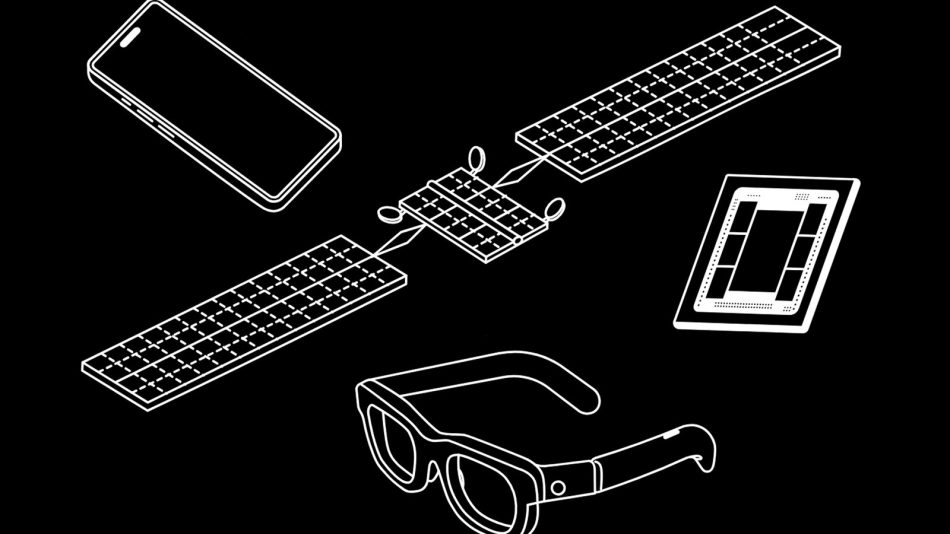
Inside the Birthplace of Your Favorite Technology
The technology industry is constantly evolving, driven by innovations that shape our daily lives. Many of these advancements can be traced back to Bell Labs, an iconic research institution located in suburban New Jersey. Established in 1925, Bell Labs has been at the forefront of technological breakthroughs, producing inventions that have laid the groundwork for modern communications, computing, and more.
The Legacy of Bell Labs
Bell Labs celebrated its centennial in 2025, marking a century of groundbreaking research and development. From the invention of the transistor to the formulation of information theory, Bell Labs has significantly influenced the technological landscape. Jon Gertner, author of “The Idea Factory,” notes, “Every hour of your day has a bit of Bell Labs in it.” This statement underscores the pervasive impact of the lab’s innovations on our everyday experiences.
Key Inventions from Bell Labs
Throughout its history, Bell Labs has produced numerous inventions that have transformed technology. Below are some of the most notable contributions:
1. Information Theory
Developed by Claude Shannon, information theory is often referred to as the “Magna Carta of the information age.” This mathematical framework is essential for transmitting information accurately and reliably, serving as the foundation for modern computing and telecommunications.
2. The Transistor
Invented in 1947, the transistor is a fundamental building block of modern electronics. This tiny device acts as an on-off switch for electrical signals, enabling the development of everything from computers to smartphones. The invention of the transistor revolutionized the tech industry by allowing for the miniaturization of electronic components.
3. The Solar Cell
In 1954, Bell Labs developed the silicon solar cell, which converts sunlight into electricity. Although initially too expensive for widespread use, advancements in semiconductor technology have made solar energy more accessible and affordable, leading to its adoption in various applications today.
4. The Charge-Coupled Device (CCD)
Introduced in 1969, the charge-coupled device is a light-sensitive electronic sensor that paved the way for digital imaging. CCD technology has been instrumental in the development of cameras and camcorders, allowing for high-quality image capture.
5. Telstar and Satellite Communications
Bell Labs played a crucial role in the development of satellite technology. In 1962, the lab launched Telstar, the first active communications satellite, which enabled real-time international phone calls and television broadcasts. This innovation marked a significant milestone in global communications.
6. Cellular Technology
In the 1970s, Bell Labs developed the framework for cellular phone technology. The first commercial cellular service was launched in Chicago in 1983, leading to the proliferation of mobile phones and, eventually, smartphones that dominate communication today.
7. The Picturephone
Introduced at the 1964 New York World’s Fair, the Picturephone allowed users to see the person they were speaking with. Despite its initial excitement, the high cost of calls led to its commercial failure. However, the concept of video calling has since become commonplace with modern technology.
The Cultural Impact of Bell Labs
Bell Labs has not only influenced technology but has also left its mark on popular culture. The lab’s innovations have inspired various media, including films and television shows. For instance, the 1968 film “2001: A Space Odyssey” drew inspiration from Bell Labs, and characters in shows like “The Marvelous Mrs. Maisel” and “Severance” are linked to the lab’s legacy.
Conclusion
Bell Labs remains a symbol of innovation and creativity in the technology sector. Its contributions have shaped the way we communicate, work, and interact with the world around us. As we continue to advance into the future, the legacy of Bell Labs serves as a reminder of the power of research and collaboration in driving technological progress.
Frequently Asked Questions
Bell Labs is known for its groundbreaking inventions in the fields of telecommunications, computing, and materials science, including the transistor, information theory, and solar cells.
The transistor was invented by John Bardeen, Walter Brattain, and William Shockley at Bell Labs in 1947, which revolutionized the electronics industry.
Bell Labs has influenced modern technology by providing foundational inventions and theories that underpin current technologies, including smartphones, satellites, and digital imaging.
Note: The information provided in this article is based on historical data and research related to Bell Labs and its contributions to technology.