Netherlands E-Commerce Market 2026: Digital Boom, Mobile Commerce & Hyper-Growth Trajectory
The Netherlands e-commerce market is undergoing explosive growth, driven by widespread digital adoption, high internet penetration, and evolving consumer preferences toward online shopping. As one of Europe’s most digitally advanced economies, the Netherlands has become a key hub for e-commerce innovation and online retail expansion.
Market Overview
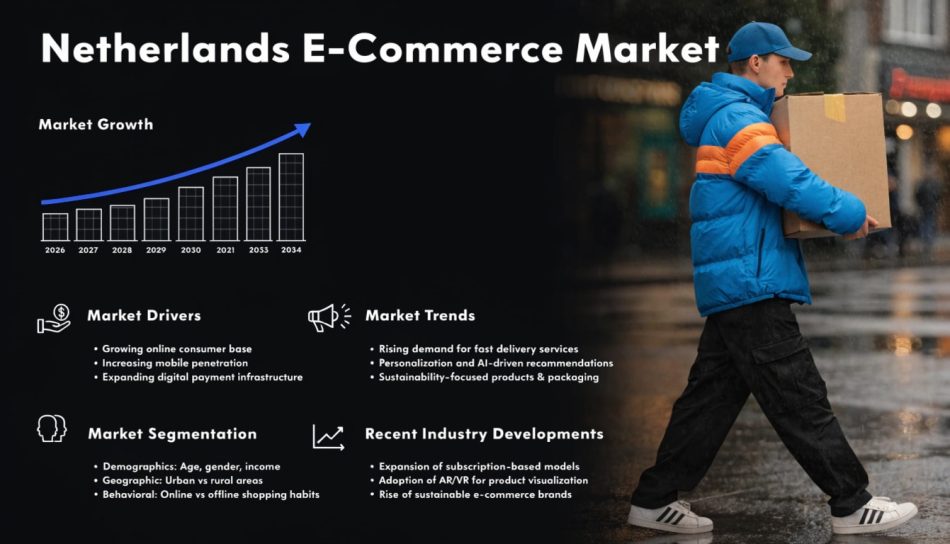
According to market estimates, the Netherlands e-commerce market size reached USD 321.60 billion in 2025 and is projected to reach USD 2,987.95 billion by 2034, exhibiting a remarkable CAGR of 24.97% during 2026–2034. This exceptional growth reflects a structural shift in consumer behavior, where online shopping is becoming the default mode for purchasing goods and services.
Market Drivers
Elevated Online Access and Mobile Utilization
A key factor behind the growth of the Netherlands e-commerce market is its exceptionally high degree of digital connectivity. A significant portion of the population can access high-speed internet, facilitating smooth online shopping experiences. The use of smartphones is a significant element, enabling consumers to make purchases at any time and from any location. Mobile commerce is growing more prevalent, as consumers utilize apps and mobile browsers for making purchases.
Increasing Consumer Confidence and Online Transactions
Trust in online transactions among consumers is consistently growing, bolstered by reliable payment systems and robust regulatory frameworks. Essential elements consist of:
- Safe online payment channels
- Policies for buyer protection
- Streamlined return and refund processes
The use of digital wallets, immediate bank transfers, and Buy Now Pay Later (BNPL) options is further boosting online expenditures.
Growth of E-Commerce Platforms and Marketplaces
Online marketplaces and retail platforms are playing a central role in market expansion. Leading players such as Bol.com, Zalando, and Coolblue offer a wide range of products, competitive pricing, and fast delivery services. E-commerce platforms are enhancing user experience through:
- Personalized recommendations
- Subscription services
- Loyalty programs
These innovations are increasing customer engagement and driving repeat purchases.
Expansion of Logistics and Fulfillment Infrastructure
The Netherlands is a major logistics hub in Europe, with advanced transportation networks and efficient supply chains. This supports fast and reliable delivery services—an essential factor in e-commerce growth. Same-day and next-day delivery options are becoming standard, improving customer satisfaction and encouraging more frequent online shopping. The country’s strategic location also enables cross-border e-commerce, connecting businesses to broader European markets.
Market Segmentation & Key Insights
By Product Category
The Netherlands e-commerce market includes:
- Electronics and appliances
- Fashion and apparel
- Food and groceries
- Furniture and home décor
- Beauty and personal care
Electronics and fashion are among the largest segments due to high consumer demand and frequent purchases.
By Business Model
The market can be segmented into:
- Business-to-Consumer (B2C)
- Business-to-Business (B2B)
- Consumer-to-Consumer (C2C)
B2C dominates the market, while B2B is expected to grow rapidly as businesses digitize procurement processes.
By Device Type
The market is also segmented by device type:
- Desktop
- Mobile
- Tablet
Mobile devices account for a significant share of traffic and transactions, reflecting the shift toward mobile-first commerce.
By Payment Method
The preferred payment methods include:
- Digital wallets
- Credit/debit cards
- Bank transfers
- BNPL solutions
Digital wallets and BNPL services are gaining popularity due to convenience and flexibility.
Opportunities for Growth
Expansion of Mobile Commerce (M-Commerce)
Mobile commerce is expected to be a major growth driver, as consumers increasingly rely on smartphones for shopping. Opportunities exist in:
- App-based shopping experiences
- Mobile payment integration
- Personalized mobile marketing
Growth of AI-Driven Personalization
Artificial intelligence is transforming e-commerce by enabling personalized shopping experiences. AI tools can:
- Recommend products based on user behavior
- Optimize pricing strategies
- Improve customer engagement
This enhances conversion rates and customer satisfaction.
Cross-Border E-Commerce Expansion
The Netherlands’ strategic location makes it a gateway to European markets. Businesses can leverage this advantage to expand cross-border sales and reach international customers.
Sustainability and Circular Economy Models
Sustainability is becoming a key focus in e-commerce. Consumers are increasingly supporting:
- Eco-friendly packaging
- Sustainable products
- Resale and circular economy platforms
Companies adopting sustainable practices can gain a competitive edge.
Recent Developments in the Netherlands E-Commerce Market
In 2025, the market experienced rapid expansion driven by increased internet usage and rising consumer trust in online shopping. The growth of mobile commerce continued significantly, with smartphones becoming a primary shopping channel. Advancements in logistics, AI-driven personalization,