
The Tech Download: Can Hyperscalers Justify Their Huge AI Capex?
In recent months, hyperscalers have announced ambitious capital expenditure (capex) plans that could reach a staggering $700 billion this year, largely driven by the booming demand for artificial intelligence (AI) capabilities. This level of investment is not only significant but also raises questions about the sustainability and profitability of such expenditures.
The State of AI Investment
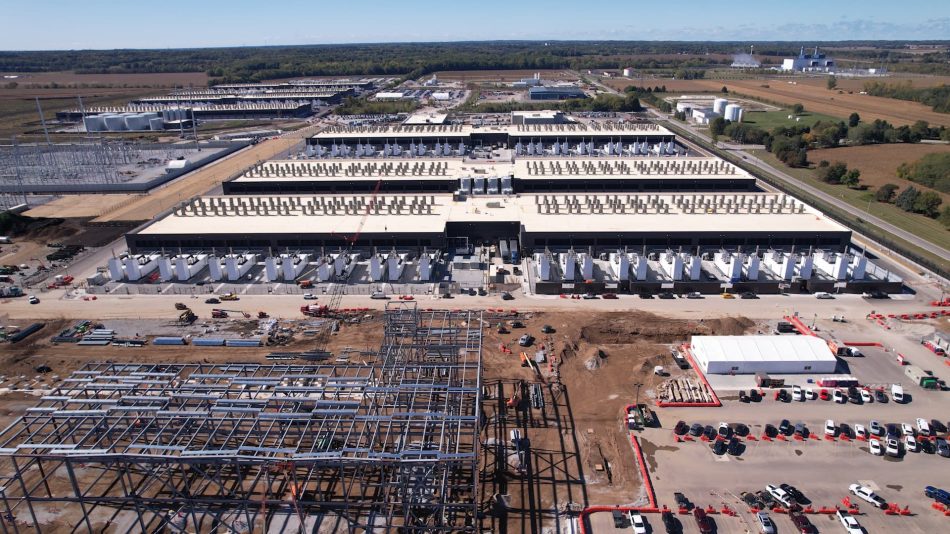
The capital commitments from major tech companies like Amazon, Microsoft, Meta, and Alphabet are reminiscent of the early days of the internet boom. These hyperscalers are racing to expand their data center capacities to accommodate the increasing demand for AI services. This year’s projected capex is more than the GDP of several nations, including the United Arab Emirates, Singapore, and Israel.
Market Reactions and Investor Sentiment
Despite the excitement surrounding AI, investor sentiment has been jittery. Recently, shares of major tech companies saw a significant decline, wiping out over $1 trillion from the market caps of Big Tech firms. Concerns about the scale of AI spending and the timeline for recouping these massive investments have left many investors feeling uneasy.
Understanding the Financial Implications
According to Michael Field, chief equity strategist at Morningstar, the current capex represents a 60% increase compared to the previous year. He warns that at some point, the investment becomes a binary bet: either the demand for AI services will materialize and justify the spending, or the businesses could face dire consequences.
UBS has noted that this year’s capex will consume nearly 100% of the cash flow from operations for these companies, compared to a historical average of 40%. This shift raises concerns about the sustainability of their financial health, especially if the returns on these investments are not realized in a timely manner.
Debt and Cash Flow Concerns
Bob Savage, head of markets macro strategy at BNY, emphasizes that while the capex itself might not be alarming, the source of the funding is critical. Increased borrowing among mega-cap companies could detract from equity holdings and put their balance sheets at risk. For instance, Oracle has announced plans to raise between $45 billion and $50 billion in the 2026 calendar year, while Alphabet is preparing to raise $20 billion from a U.S. dollar bond sale.
Analysts Remain Bullish
Despite the market fluctuations, many analysts maintain a positive outlook on hyperscaler stocks. Gil Luria, head of technology research at D.A. Davidson, points out that the leading data center builders, such as Amazon, Microsoft, and Google, are already seeing positive returns because they are pre-selling their capacity before construction is completed. As AI usage continues to grow, the expectation is that consumers and businesses will be willing to pay a premium for the value created by these services.
The Tight Timeline for Returns
However, the timeline for recouping these substantial investments remains uncertain. Field highlights that the estimated useful life of much of the spending, including data centers and chips, can be as short as three to five years. This means that hyperscalers must generate significant returns on their investments before 2030, creating a tight window for success.
To alleviate investor concerns, hyperscalers need to provide clear timelines regarding payback periods and credible strategies for monetization. Until these factors are addressed, skepticism among investors is likely to persist, potentially leading to further market volatility in the coming months.
Recent Developments in the Tech Industry
In addition to the capital expenditure discussions, several noteworthy events have occurred in the tech landscape. Alphabet is returning to the debt market to fund its AI initiatives after revealing it could spend $185 billion in capital expenditure this year. Meanwhile, Elon Musk’s xAI has faced challenges, losing two co-founders in quick succession, which raises questions about the stability of the organization.
Furthermore, proposals in the U.S. to relocate 40% of Taiwan’s semiconductor supply chain have been met with skepticism, as Taiwan’s top trade negotiator labeled them “impossible.” In a separate development, Apple experienced its worst stock market day since April, attributed to delays with Siri and scrutiny of its news app.
Lastly, Anthropic, an AI company, recently closed a $30 billion funding round, achieving a post-money valuation of $380 billion, marking one of the largest private tech raises on record.
Conclusion
The current landscape of AI investment among hyperscalers is both exciting and fraught with uncertainty. While the potential for growth is significant, the risks associated with such enormous capital expenditures cannot be overlooked. Investors will be closely monitoring the developments in this space as companies strive to justify their investments and deliver on the promises of AI.
Frequently Asked Questions
Hyperscalers are large-scale cloud service providers that operate massive data centers and offer scalable computing resources. Companies like Amazon, Microsoft, Google, and Meta are considered hyperscalers due to their extensive infrastructure and capacity to handle large amounts of data.
Investors are concerned about AI capex because the scale of investment is unprecedented, and there are uncertainties regarding the timeline for recouping these funds. With significant amounts of cash flow being allocated to capex, there are worries about the sustainability of these companies’ financial health.
The expected return on investment for hyperscalers is uncertain and varies by company and project. Analysts suggest that as AI usage grows, companies may see increased demand and willingness to pay for AI services, but the actual timelines for achieving these returns remain unclear.